HardwareHub turns unclear hardware work into products teams can build, test, and improve.
This page shows the kind of hands-on mechanical work HardwareHub is built around: enclosures, prototypes, test setups, vendor prep, and the judgment to keep work moving when builds get messy.
Project names and details are generalized where permission or confidentiality requires it.
The common thread is ownership when the design has to become real parts.
The strongest programs are usually the ones where mechanical decisions stay grounded in real boards, fasteners, vendors, assembly steps, and what the team can actually build. The work below is selected to show practical judgment across prototypes, supplier prep, production updates, and test hardware.
Enclosure and packaging decisions shaped around real electronics, switches, and connectors.
Fast updates across CAD, 3D printing, CNC, bench wiring, and hands-on testing.
Practical discipline when vendors, build conditions, or timelines start changing in real time.
Featured case studies
Three proof points that show design judgment under real build pressure.
These are selected for signal: hardware packaging, mechanism updates, and practical discipline when the work leaves the screen.
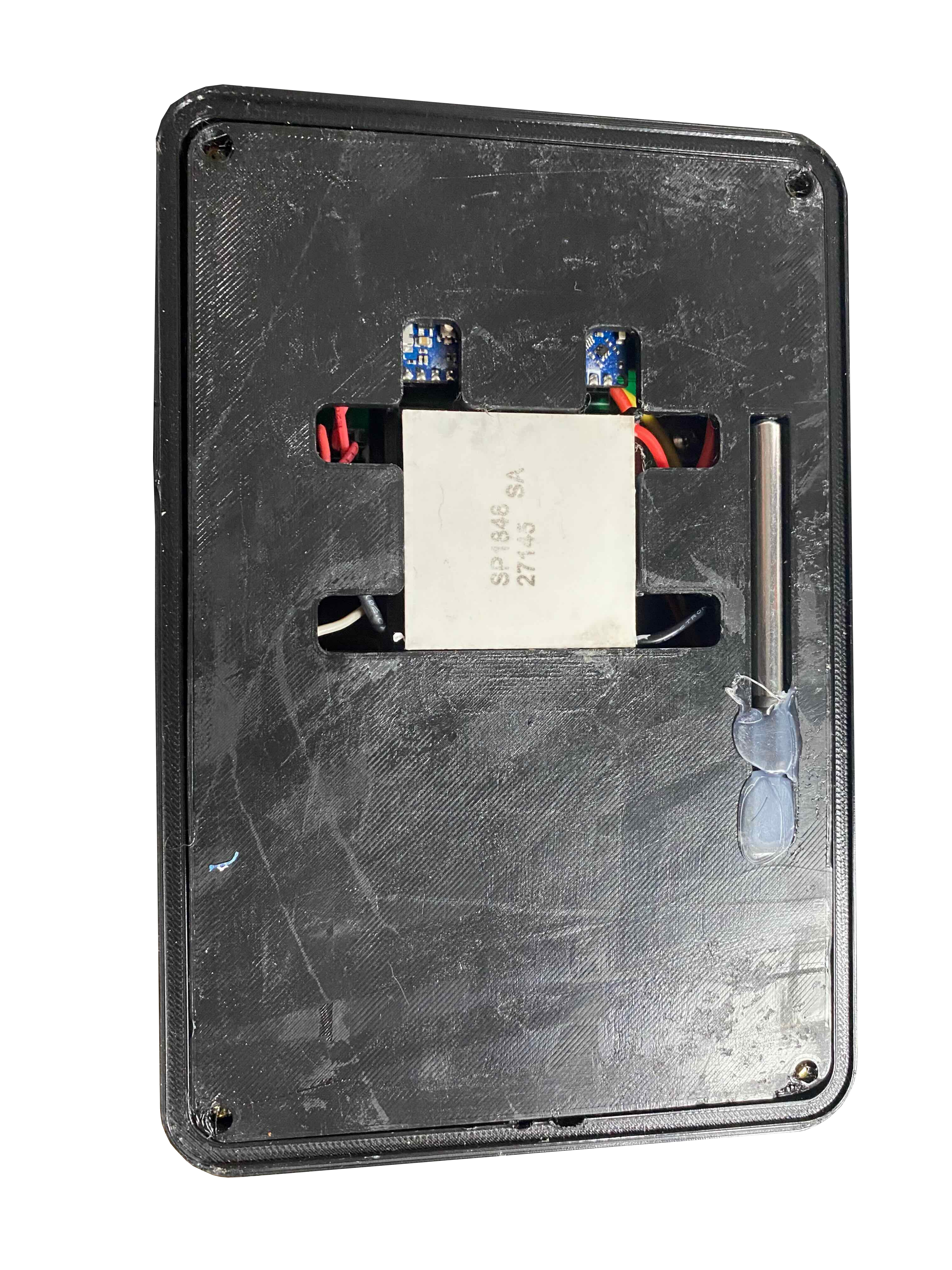
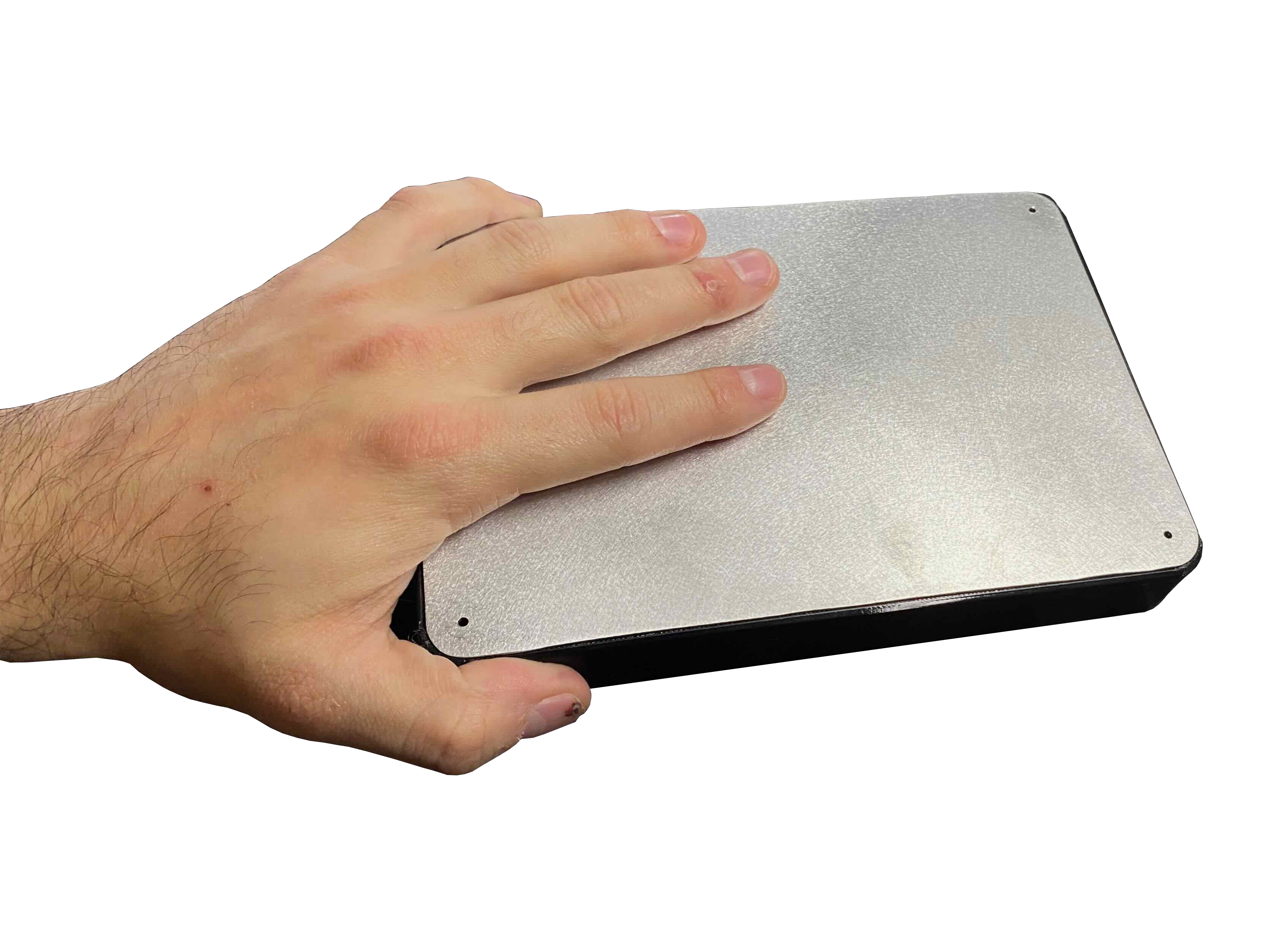
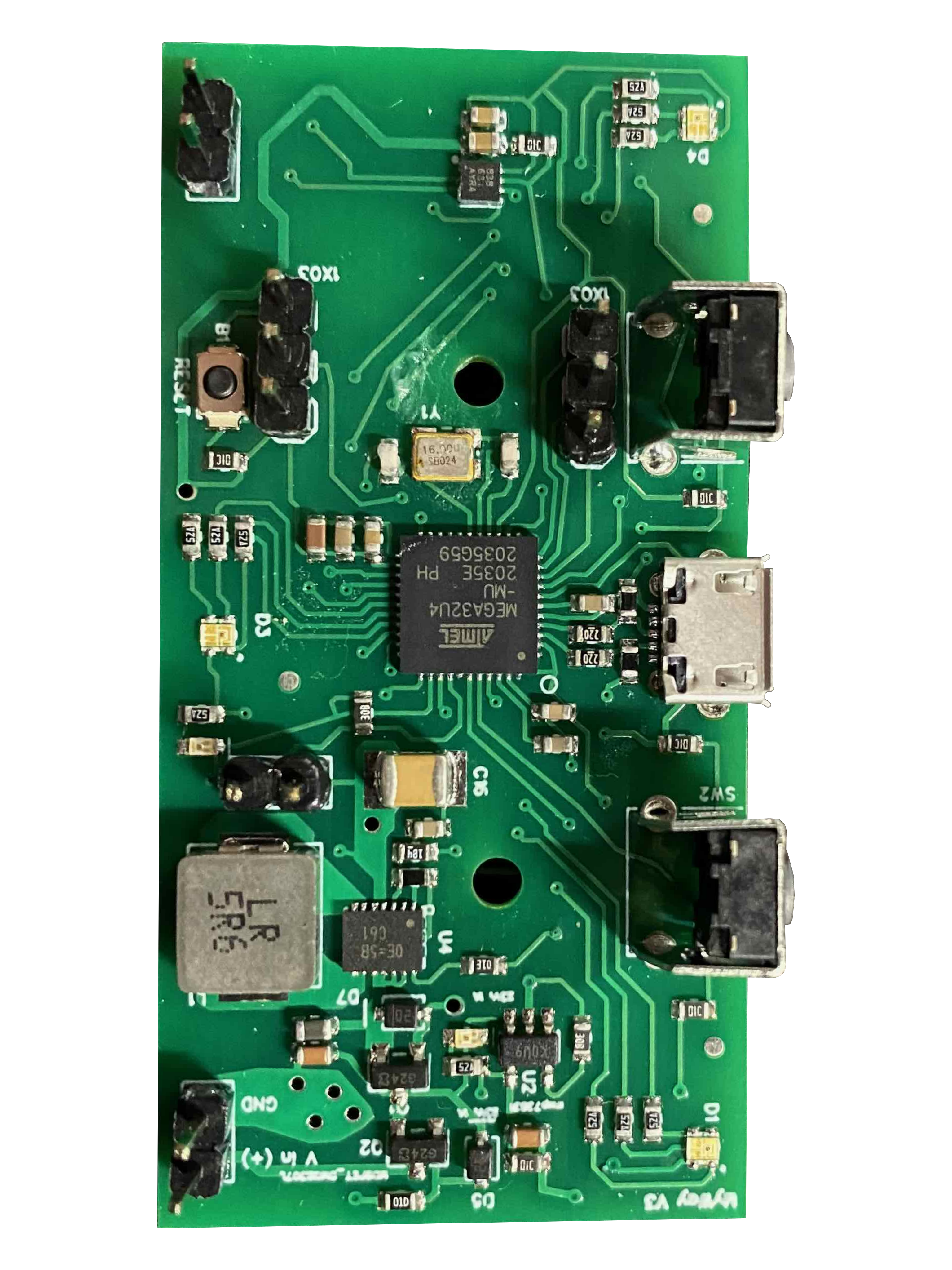
A handheld prototype designed to package controlled cooling and warming, custom electronics, enclosure details, and hands-on testing into one customer-discovery product.
Challenge
Single-use ice packs are limited and unreliable for many urgent situations. Kelvin needed a reusable prototype that could control temperature, stay portable, and prove the product direction before any production decision.
Work delivered
Prototype mechanical design and enclosure packaging
Collaboration with an electrical engineer on the custom PCB
Hands-on assembly, bring-up, and prototype testing
What moved forward
Moved from product concept to a working physical prototype.
Created a stronger base for customer discovery and product feedback.
Kept the work focused on prototype learning rather than claiming production readiness.
Founder MVP prototype
PAWD v0.5 MVP for short-stop pet care
A secure, conditioned short-term pet space built as an MVP so the team could test the idea with a real physical product.
Challenge
Pet owners sometimes need to make a quick stop while their dog is with them. PAWD needed a safe, conditioned, secure prototype that felt real enough for customer discovery.
Work delivered
Product design, prototype build, and assembly
Smart lock, roof LED, and enclosure iteration support
Vendor sourcing and prototype testing before production decisions
What moved forward
Moved from MVP concept to a physical prototype for customer discovery.
Iterated through practical hardware features instead of staying at concept level.
Built a clearer vendor and manufacturing direction before any production commitment.
Sheet metal enclosure
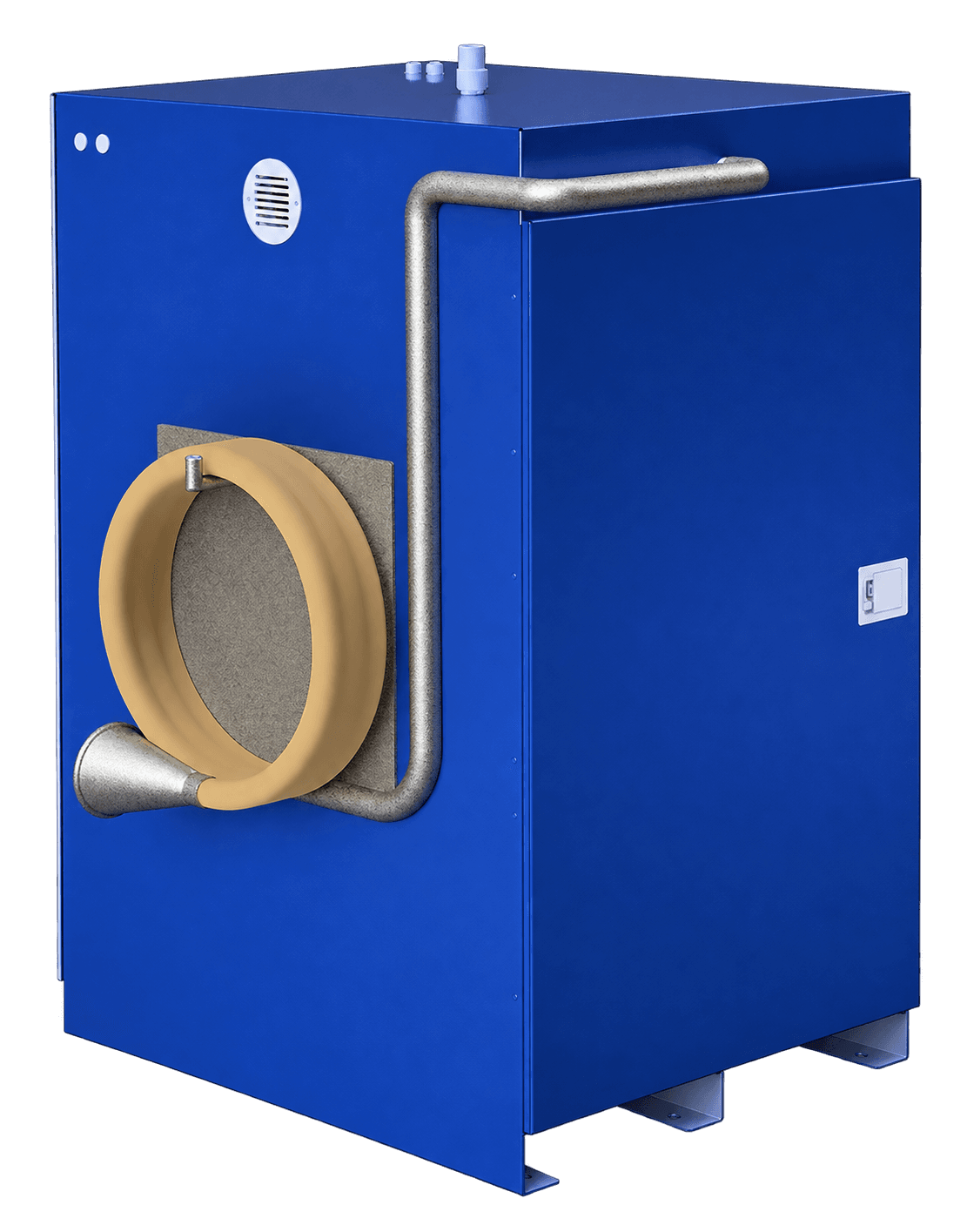
Weather-resistant inverter enclosure
A confidential power-electronics enclosure program that needed a custom sheet metal design, outdoor-use considerations, and a fast path to manufactured test hardware.
Challenge
The company needed to package inverter electronics in an outdoor environment quickly while keeping fit, access, weather exposure, and fabrication reality in view.
Work delivered
Custom sheet metal enclosure design
Outdoor electronics packaging and mechanical layout decisions
Contract manufacturer coordination for manufactured test hardware
What moved forward
Moved from urgent enclosure need to manufactured hardware for testing.
Supported a design path that could continue into production.
Kept company identity confidential while preserving the practical engineering story.
Prior product-development experience
Additional work behind the HardwareHub approach.
Some earlier work is shown without company names, logos, CAD, or images. The point is the capability: making physical products easier to build, test, quote, and improve.
Production improvement
Robotic garment-care machine
Prior experience improving steam plumbing, robotic motion, custom tank design, 3D-printed fixtures, and sheet metal updates for a next-generation garment-care machine.
Useful for teams improving an existing prototype or product after customer feedback.
Mechanical design ownership
Energy-storage enclosure systems
Prior experience as the primary mechanical design owner for distributed energy-storage systems, working across enclosure design, power electronics packaging, testing, vendors, manufacturing, and production support.
Useful for teams building hardware where enclosures, electronics, heat, service access, and manufacturing all have to work together.
Internal test equipment
Fabric chemistry test fixture
Prior experience building a controlled test fixture that applied odor and cleaning chemistry to fabric samples, making early chemistry testing more repeatable.
Useful for teams that need practical test equipment before they can make better product decisions.
How we work
Fast enough to keep momentum, careful enough for real builds.
The pattern is consistent: build the smallest test that answers the real question, keep version discipline visible, and stay close to how parts get made instead of guessing from a distance.
Prototype where the decision is
We bias toward the fastest physical test that answers a real mechanical question, whether that means printed parts, CNC panels, mock electronics, or a bench setup that exposes the packaging problem early.
Keep buildability and version control in view
The work gets stronger when drawings, fit checks, assembly order, and version discipline start early instead of being treated as cleanup after the prototype phase.
Stay close to how parts get made
Mechanical judgment improves when it is informed by how parts are actually machined, printed, assembled, installed, or debugged by the people doing the work.
What shows up repeatedly
The portfolio is broader than one product category.
Across consulting, product roles, and build programs, the repeated value is the same: turn unclear ideas into physical systems that can be built, tested, and improved.
Enclosure design and packaging
3D printing, CNC, and fast prototype loops
Bench testing and root-cause fixes
Build support with real manufacturing in mind
Cross-team work with electrical, firmware, vendors, and production teams
Practical build judgment when the work leaves the screen
Experience snapshot
The operating background is broader than one product category.
This is the compact version. The point is range with direct ownership, not a full employment timeline.
Hardware product development
Mechanical design, prototypes, and build support
Hands-on work across enclosures, mechanisms, test fixtures, vendor packages, prototype updates, and early production decisions.
Manufacturing and production programs
Design choices that survive real build conditions
Experience working with vendors, contract manufacturers, assemblies, documentation, and production changes when product decisions become physical parts.
Electromechanical systems
Mechanical work close to electronics, controls, and field use
Experience packaging electronics, controls, thermal systems, service access, and mechanical structures into products that can be tested and improved.
Next step
If your hardware project needs clearer decisions before the next spend, start with a project conversation.
The fastest way to see fit is to talk through the product, the issue slowing it down, and what needs to move next.